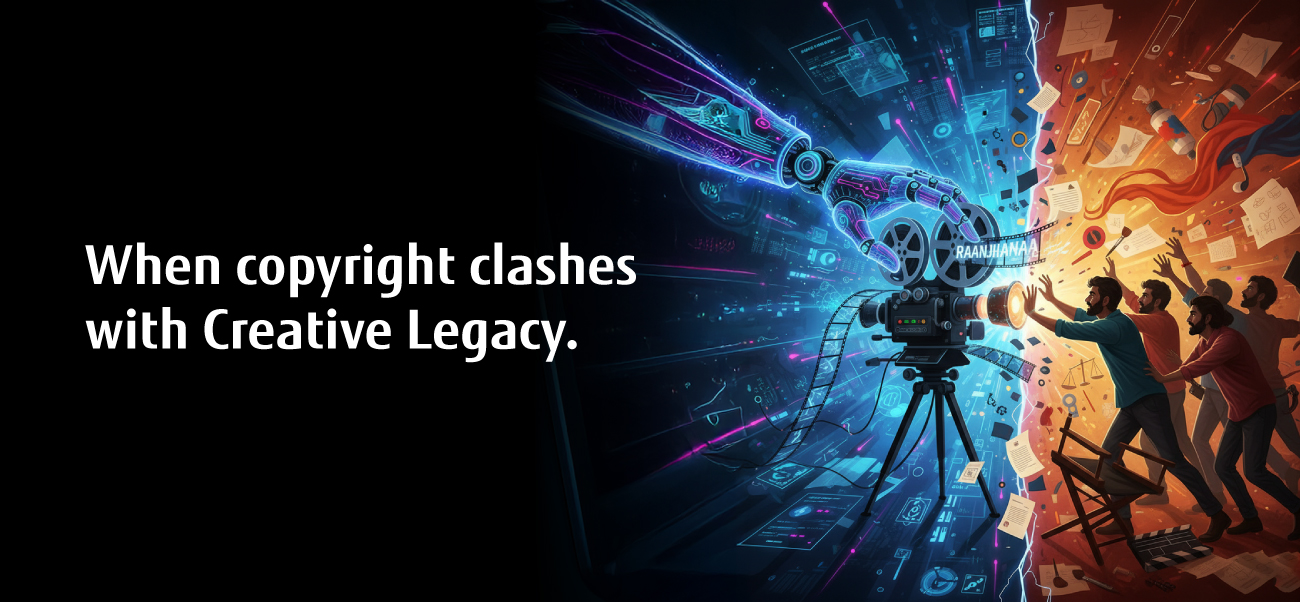
Recently, Eros International Media Ltd. (“Eros”), the production house owning the rights to the film ‘Raanjhanaa’, stirred a major controversy by releasing an AI-generated reimagined version of the film. This version sharply deviates from the original tragic finale cherished by fans and creators alike.
Fans who were for over a decade reminiscing over that last dialogue from Dhanush have become furious, with the film’s director Anand L Rai and lead actor Dhanush openly criticizing the move. Celebrated filmmaker Karan Johar and other industry members have sided with the director, condemning the alteration as disrespectful to the original artistic vision.
Can Eros Legally Do This?
The primary question for movie lovers and legal observers is whether Eros has the right to alter the film using AI and re-release it. The answer is yes.
Eros, as the sole and exclusive copyright holder of Raanjhanaa, retains full legal rights to monetize, adapt, and re-release the film.
This includes remakes, dubbed versions, and as we now see AI-enhanced reimagining. The company has publicly defended its decision, stating: “We are the sole and exclusive copyright holders and producers of Raanjhanaa, and are fully entitled both legally and ethically to adapt and re-release the film.”
From a copyright ownership standpoint, their position is sound. This legal entitlement comes from the intellectual property rights owned by Eros as the producer and distributor of the movie. Hence, while the creators’ artistic sentiments are valid, Eros’s actions fall within their copyright ownership rights.
The Morality and Ethics Debate
While legally valid, the decision to alter a film’s original narrative without creator consent raises ethical concerns. Anand L Rai called the AI-edited ending a “gross violation” of creative intent, arguing it violates the spirit and emotional depth of the original work.
Given the growing role of AI in the arts, this episode underscores the tension between technology-driven innovation and respect for original authorship, highlighting the need for thoughtful dialogue about creative control.
How Can Such Situations Be Avoided?
This controversy is a wake-up call for creators and legal teams alike. As AI becomes a tool for adaptation, contracts must evolve to safeguard artistic integrity.
Producers, creators, and lawyers must embed specific safeguards in contracts covering AI use, derivative works, and authorial consent. Here’s how:
What Are Moral Rights Under the Indian Copyright Act?
Under the Section 57 of the Indian Copyright Act, 1957, authors (including directors and screenwriters) hold moral rights that persist even after copyright is assigned. These include:
These rights are inalienable and survive even after the economic rights are transferred. In the case of Raanjhanaa, if the AI-generated ending is deemed to damage Anand L. Rai’s reputation or distort his creative vision, he may have grounds to assert his moral rights, even if Eros owns the copyright.
As technology reshapes how we consume and recreate art, the law must keep up pace. Not just to protect ownership, but also to honor authorship. Because sometimes, a tragic ending isn’t just a plot. It’s legacy.
References:
Disclaimer:
The content provided in this publication reflects the authors’ interpretation and understanding of applicable laws and recent developments. This publication does not constitute legal advice, opinion, or analysis and is intended solely to share insights on relevant legal developments. VH Legal disclaims any liability for actions taken based on this publication. As laws evolve frequently in India and internationally, readers are encouraged to verify the latest updates independently.
© 2024 VH Legal All Rights Reserved. Designed, Developed and Maintained By Aadyaa Communications